
Daily Health

Health for Happiness

June 24, 2015
by admin
0 comments

Hormone Disorder Acupuncture Treatment

How to Cope with Hormone Disorder in Women

Lifestyle patterns that have high enough levels of stress coupled with unhealthy eating patterns can result in hormonal imbalances, especially in women. Even healthy women who are often follow a diet will usually experience a disruption in their hormones.

Symptoms caused by the female hormone disorder that is like PMS, osteoporosis, weight gain, sex drive changes, allergies, infection of the urinary tract, it is easy to feel tired, hair loss, facial hair growth and even depression. By keeping the body’s hormonal imbalance, then a woman can find it easier to maintain weight loss, maintaining a regular menstrual cycle and can prevent the body depressed.

Here are some ways that can help to maintain the body’s hormonal balance, especially women:

1. Stay away from potential stress

Based on the result of research studies have shown that women who often do yoga will experience some hormonal changes women who have never done yoga. Resting on the sidelines of the working activity is very important and should always be your case. Many women have busy lifestyle so that they forget to rest their bodies, and how this will disturb them in maintaining the body’s hormonal balance.

2. Get a sleep time enough

Sleep is a natural way that you can do to maintain the balance of hormones that may be unstable due to fatigue after undergoing various activities throughout the day. Try to get at least 8 hours of sleep each night.

3. Consuming healthy foods

Increase the consumption of organic fruits and vegetables are fresh as well as members of nuts in your daily life that can help in maintaining the body’s hormonal balance. In addition you should also avoid to consume foods such as fried foods, soft drinks, foods rich in starch, refined vegetable oil and soy products as this may affect the body’s hormonal balance.

4. Consuming lots of Omega-3 fatty acids

Omega-3 fatty acids found in food is very functional in maintaining cell membranes to be more responsive and stay healthy, and allow the hormone in the body stay balanced. Omega-3 fatty acids also assist the body in maintaining cellular receptor sites so that conditions remain optimal. To choose more foods containing omega-3 or take 500 mg of high quality organic oils, such as hempseed oil, linseed or olive.

5. Avoid caffeine

It has been shown that stimulants, such as caffeine can cause the adrenal gland to produce excess hormones. So that the hormones in the body become unbalanced. For that try to limit the consumption of beverages containing caffeine.
June 23, 2015
by admin
0 comments

Hemiplegia

What is Hemiplegia?

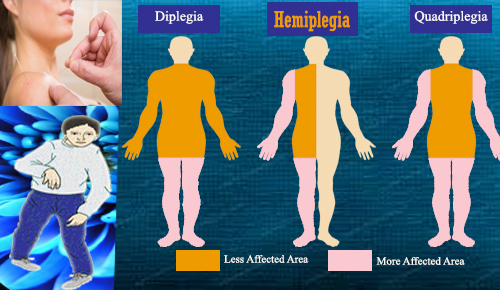
Hemiplegia is a total paralysis of the arms, legs on the same side of the body. Hemiplegia worse than hemiparesis, where half of the body has less weaknesses. Hemiplegia may be congenital or acquired from a disease or stroke. Hemiplegia is not the usual health problems. In individuals older, stroke is the most common cause of hemiplegia. In children, the majority of cases of hemiplegia have not an identifiable causes and occur with a frequency of about one in every thousand births.

Causes of Hemiplegia

The most common cause is stroke. Stroke can cause a variety of movement disorders, depending on the location. Hemiplegia is common when a stroke affects kortikospinal channels. Other causes of hemiplegia including spinal cord injury. Hemiplegia occurs in the brain or spinal cord, as well as other disease that show the same impression. Another feature of weaknesses including decreased motion control, clonus (a series of involuntary muscle contractions that are very fast), spasticity, deep tendon reflexes exaggerated and decreased endurance.

Other cause of hemiplegia in adults include traume, cerebral hemorrhage, infection and cancer. Individuals who have uncontrolled diabetes, hypertension or those who are smoker have a chance of stroke. Weakness on one side of the face may occur and may be due to virus infection, stroke or cancer.

Signs and Symptoms Hemiplegia

  • Difficult an ability balancewhile standing or walking
  • Difficulty holding, grasping or pinching
  • Decreased muscle strength
  • Muscle spasms
  • Difficulty to speaking
  • Difficulty swallowing food
  • Significant delays in reaching developmental milestones such as standing, smiling, crawling or speak
  • Most children who suffer from hemiplegia also have abnormal mental development
  • Behavioral problems such as anxiety, anger, irritability, lack of concentration or understanding
  • Emotions – depression
  • Shoulder pain – Often associated with loss of external rotation of the glenohumeral joint

Hemiplegia


June 18, 2015
by admin
0 comments

Narcolepsy (Sleep Attack Disease)

Narcolepsy is a chronic neurological disorder, affecting the part of the brain that regulate when people sleep and wakefulness. This can cause to experience daytime sleepiness excessive and sudden loss of muscle control, often triggered by strong emotions. As a result, this might fall asleep while working, cooking or even driving. These sudden sleep attacks may occur during any type of activity at any time of the day.

Narcolepsy affects about 1 out of 2,000 peoples. It’s relatively rare sleep disorder it is known as an “orphan disease” this means it a disease that affects less than 5 per 10,000 people within a community. Narcolepsy is a sleep disorder which affects the brain’s ability to regulate the normal sleep-wake cycle. This can lead to symptoms such as disturbed night-time sleep and excessive sleepiness throughout  the day. If you make a positive lifestyle changes and seek medical treatment approved, you can help reduce symptoms, increase alertness and enjoy a full and active life.

Excessive sleepiness during the day, is just one of several symptoms that often accompany narcolepsy. Overall there are four main symptoms of narcolepsy:

Hypersomnia / Excessive Daytime Sleepiness (EDS) : Excessive sleepiness during the day despite getting enough sleep at night , a feature of hypersomnia. People with EDS report mental cloudiness, a lack of energy and concentration, memory lapses, a depressed mood, and/or extreme exhaustion.

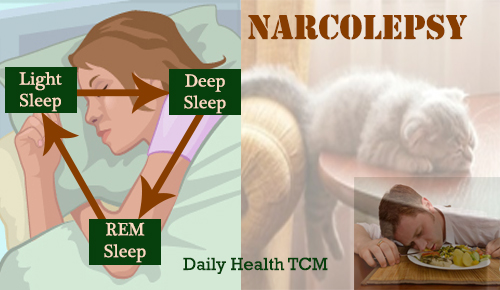
Cataplexy : The condition in which a person loses control over the functions of the muscles throughout the body gradually. Cataplexy can occur at any time, and in general the reaction is triggered by emotions such as joy, anger, stress, fear or excessive surprised. In cases of severe cataplexy, a person can lose control of the muscles throughout the body until the body becomes paralyzed while, even though the patient remains fully conscious. Loss of muscle function resembles natural process that often occurs in REM (Rapid Eye Movement) sleep.

Sleep Paralysis : Is a condition in which the entire body feels paralyzed that normally occurs during rapid eye movement (REM) sleep, the period of sleep during which most dreaming occurs. This temporary immobility during REM sleep may prevent your body from acting out dream activity. People with narcolepsy often experience a temporary inability to move or speak when waking from sleep. In addition, There is a sense of heavy pressure in the chest as if something heavy being crushed. Although the bodies recovered in a while, most people who experience sleep paralysis feel fear permanent paralysis or even death.

Hallucinations : These hallucination in the form of images or sounds that feels very real and sometimes terrible can happen in tandem with the phenomenon of sleep paralysis. A person may experience hallucination when beginning to fall asleep (hypnagogic hallucination) or when a new awake (hypnopompic hallucination). Experts say that the hallucination signifies intervention in the process REM.

Narcolapsy