Insomnia is difficulty falling asleep or staying asleep, even when a person has the chance to do so. People who have insomnia have trouble falling asleep, staying asleep, or both. As a result, they may get too little sleep or have poor-quality sleep. They may not feel refreshed when they wake up. Because different people need different amounts of sleep, insomnia is defined by the quality of people sleep and how they feel after sleeping. Even if they are spending eight hours a night in bed, if they feel drowsy and fatigued during the day, they may be experiencing insomnia.
Types of Insomnia
There are two types of Insomnia:
Primary Insomnia : This is when the sufferer has sleep problem that are not directly associated with any other health condition or problem.
Secondary Insomnia : This type of insomnia often is a symptom of an emotional, neurological, or other medical or sleep disorder.
What Causes Insomnia?
In order to properly treat and cure people with insomnia, they need to become a sleep detective. Emotional disorders that can cause insomnia include depression, anxiety, and post traumatic stress disorder. Alzheimer’s disease and Parkinson’s disease are examples of neurological disorders that can cause insomnia.
Illness
Some medicines
Significant life stress
Menopause and hot flashes
Emotional or physical discomfort
Interference in people normal sleep routine
Gastrointestinal disorders, such as heartburn
Environmental factors like noise, light or extreme temperatures (hot or cold) that interfere with sleep
What are the Signs and Symptoms if Insomnia?
The main symptom of insomnia is trouble falling or staying asleep, which leads to lack of sleep. However, there are several signs and symptoms that are associated with insomnia
Tension headache
Difficulty socializing
Worrying about sleeping
Gastrointestinal symptoms
Awakening during the night
Poor concentration and focus
Daytime fatigue or sleepiness
Awakening earlier then desired
Difficulty falling asleep at night
Irritability, depression or anxiety
Still feeling tired after a night’s sleep
Being uncoordinated, an increase in errors or accidents
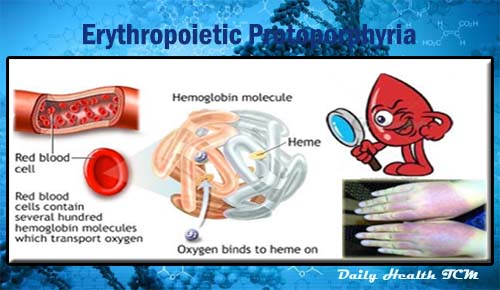
Erythropoietic Protoporphyria (EPP) is a collection of genetic disease called porphyrias. EPP is a hereditary disease caused by an enzyme deficiency ferrochelatase. Protoporphyrin accumulates in the body especially in the red blood cells, in the liver and in the skin which becomes sensitive to light.
There is usually a shortage of an enzyme (a protein which helps convert one chemical substance into another), called ferrochelatase (FECH), that adds iron to protoporphyrin to make haem. As a result of the enzyme shortage, protoporphyrin levels build up in the blood. As blood passes through the skin, the protoporphyrin can absorb the energy from sunlight. This sets off a chemical reaction that can slightly damage surrounding tissues. The nerve endings in the skin interpret this as itching or burning pain, and if the blood vessels are affected, they can leak slightly, causing swelling. The light that the protoporphyrin absorb is different from that which causes normal sunburn. Sunburn is caused by the shorter wavelengths of ultraviolet light (UVB), but in EPP the skin is more sensitive to longer wavelengths (UVA) and visible light. Light of the wavelengths that cause the skin reaction in EPP, umlike reaction in EPP, unlike those that cause sunburn, can pass through window glass.
Symptom:
The first symptom that usually arises is in childhood. At this stage the child will feel pain in the skin when it is exposed to sunlight. It often occurs in the hands, feet, face and ears.
Usually people with this disease have a soft skin and when it is infected it will cause the skin to become red, swollen and blistered.
There is a blend scars on the skin that can sometimes be seen on the nose, cheek, hand and thumb.
How is EPP diagnosed?
The diagnosis is usually suspected from the story that is story that is told to the doctor, and can be confirmed by a blood test. The blood test measures the amount of protoporphyrin in the blood. Some doctors will also ask for a stool sample to measure the level of protoporphyrin. No urine tests are relevant to this condition except to exclude other types of porphyria.
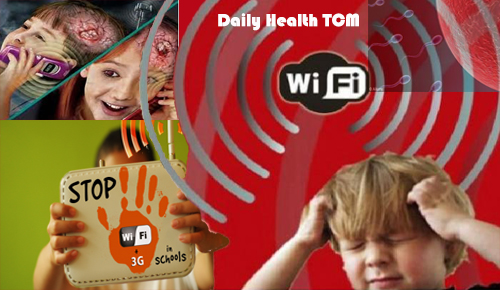
Do not be too obsessed to always online until forget about dangers that are exposed to radiation without conscious. Among adolescents can be said the group’s most active social media users worldwide. Because of that, they are willing to do whatever it takes to stay online. Recognizing with this, the hotel and restaurant is no exception to provide this service to attract customers, especially teenagers. Some believe, possibility of Wi-Fi radiation is not very high but it can cause headache, fatigue and even harder to breathe. Besides that, the worry of these effects could lead to cancer and neurological disorders in the long term.
Perhaps most shocking is that this information is not new or even that controversial. In fact, in 2008 the well-renowned publication Scientific American ran a piece called “Mind Control by Cell Phone” which explained the danger Wi-Fi has on the human brain.
10 Facts The Potential Dangers of Wi-Fi
1. Contributes to the Development of Insomnia
Participants were exposed to the electromagnetic signals from real phones, or no signal from fake phones. Those exposed to the electromagnetic radiation had a significantly more difficult time falling asleep and change in brainwave patterns were observed. It’s been suggested that sleeping near a phone, in a home with Wi-Fi, or in an apartment building with many Wi-Fi signals can create chronic sleep problems as the constant bombardment of Wi-Fi pollution interferes with falling asleep and sleep patterns. For many, sleep deprivation is just the start for larger problems. The development of depression and hypertension have also been linked to inadequate sleep.
2. Damaging to Childhood Development
Exposure to non-thermal radio frequency radiation from Wi-Fi and cellular phones can disrupt normal cellular development, especially fetal development. In fact, the disruption of protein synthesis is so severe that authors specifically noted that this cell property is especially pronounced in growing tissues, that is, in children and youth. Consequently, these population groups would be more susceptible than average to the described effects.
3. Affects Cell Growth
When a group of Danish ninth grader experienced difficulty concentrating after sleeping with their cell phones by their head, they performed an experiment to test the effect of wireless Wi-Fi on gardens cress. One set of plants was grown in a room free of wireless radiation; the other group grown next to two routers that released the same amount of radiation as a cell phone. The result is the plants nearest the radiation didn’t grow.
4. Details Brain Function
Just as the Danish high schoolers noticed problems with concentration, scientists have begun to look at the impact of 4G radiation on brain function. Using MRI technology, research performed just last year found that persons exposed to 4G radiation had several areas of reduced brain activity.
5. Reduces Brain Activity in Females
A group of 30 healthy volunteers, 15 men and 15 women, were given a simple memory test. First, the entire group was tested without any exposure to Wi-Fi radiation. Then, they were exposed to 2.4 GHz Wi-Fi from a wireless access point for about 45 minutes. During that portion of the testing, brain activity was measured and the women had a noticeable change in brain activity and energy levels. Sorry ladies! But guys, don’t too comfortable.
6. Neutralizes Sperm
Because we’ve known for a long time that the heat generated by laptops kills sperm. Well, now it turns out that heat isn’t the only threat to a man’s virility. Research has found exposure to Wi-Fi frequencies reduce sperm movement and cause DNA fragmentation. Both human and animal testing has confirmed that exposure negatively affects sperm.
7. May Impact Fertility
It’s not just sperm. The results of an animal study suggest that some wireless frequencies may prevent egg implantation. During the study, mice exposed 2 hours a day for 45 days had significantly increased oxidative stress levels. The cellular damage impact on DNA structure from exposure suggest a strong possibility of abnormal pregnancy or failure of the egg to implant.
8. Provokes Cardiac Stress
If you think your heart races when surrounded by wireless network or 3G or LTE cell phones, it may not be in your head. A study involving 69 subjects reported that many of them experienced a real physical response to electromagnetic frequencies. Exactly what was the physical response? Increase heart rate that similar to the heart rate of an individual under stress.
9. Linked to Cancer?
This is extremely controversial but we can’t ignore that plenty of animal models indicate that exposure to electromagnetic radiation increases the risk of tumor development. While human studies are rare, reports and case studies abound. One such case involves a young 21-year-old woman who developed breast cancer. What makes this case unique was that her family did not have a predisposition to breast cancer, and she developed the tumor right on the spot she carried her cell phone in her bra.
10. You Can Protect Yourself
Although mainstream outlets may ignore the proven dangers, especially in the US and Canada, researches have identified several methods that can offer a level of defense. First off, reduced melatonin seems to correspond with exposure. Thus, increasing melatonin through supplementation may help offset some of the effects.